Deep Layer / Loop Map
Loop Map and Hidden Friction Points
You do not lack willpower. Many times, you are simply living inside a loop that has never been properly named. This topic helps you see the trigger, the reaction, the protection strategy, and the price you keep paying.
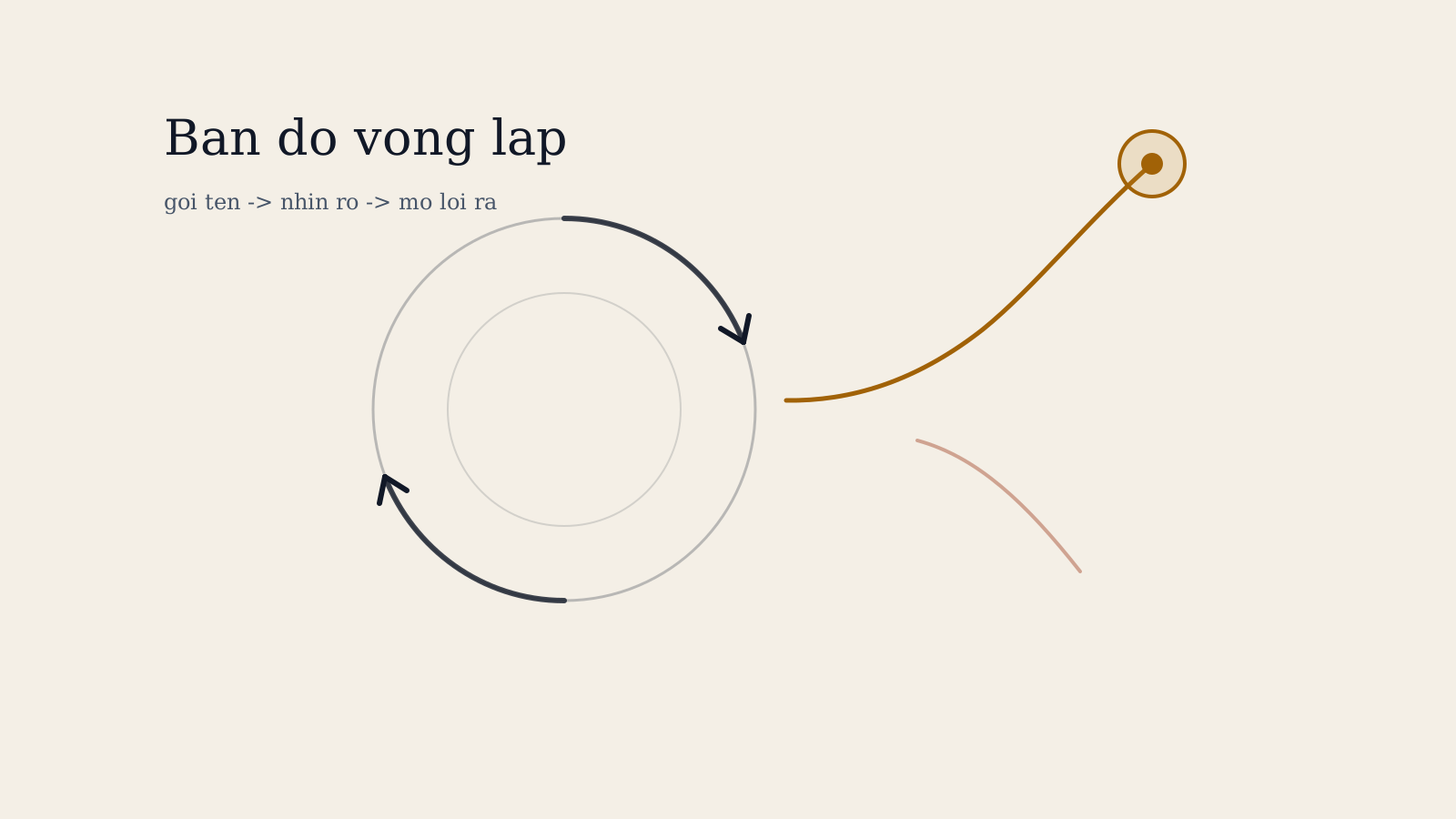
Some problems do not return because you are weak. They return because the old path inside you is still too familiar.
A loop is rarely dramatic. It is just familiar enough to feel like identity. But every time it repeats, it drains a little more energy, a little more self-trust, and leaves behind a fatigue that is hard to name.
This topic is not asking you to fix everything at once. It gives you a first map, so you do not keep getting lost in your own reactions.
What to remember before you begin
The goal here is not to judge yourself one more time. The goal is to see more clearly, so you can choose differently.
Module 1 - A loop does not come from nowhere
A loop often starts with a familiar trigger: criticism, silence, a feeling of being left behind, pressure to perform, or the fear of getting something wrong.
Then comes the familiar reaction. Some people avoid. Some tighten. Some go quiet. Some overwork so they do not have to feel what is really there.
Then comes the familiar outcome. And that outcome keeps feeding the old belief that you are not enough, that you always fail, that you must try harder, or that change is impossible for you.
Module 2 - The ways we protect ourselves
Many reactions are not bad. They once helped us survive, stay safe, or get through a hard season of life.
The problem starts when we keep using the same strategy inside a life that now needs something different.
- delay to avoid failure
- over-control to avoid uncertainty
- people-please to avoid being left
- go quiet to avoid conflict
- overdo things so you do not have to feel
Module 3 - The cost of repetition
A long-running loop does not only take time. It takes life force.
- you are tired without knowing why
- you keep collapsing at the same point
- you stop trusting your own decisions
- relationships wear down under repeated reactions
When you see the cost clearly, a deeper motivation appears. Not because you must become perfect. Because you no longer want to keep losing what matters.
Module 4 - Drawing the map
A minimal loop map has four points:
- Trigger: what touched me?
- Reaction: what did I do right away?
- Protection: what feeling was I trying not to face?
- Cost: what did this reaction cost me?
Once you have these four points, you can begin to see where change is possible. You do not need to replace your whole self. You only need one honest opening.
Today's practice
- Write down one recent repeating pattern.
- Name the trigger.
- Name the reaction.
- Name the cost.
- Choose one very small adjustment for the next time.
Module 5 - Notes and when deeper support is needed
This topic is not for self-diagnosis, and it is not asking you to solve everything in one sitting.
If observation pulls up intense body reactions, destabilizing memories, or a sense of unsafety, pause and seek the right professional support. What matters here is that you now have a truer map than you had yesterday.